
How Prefab Construction Cuts Project Costs by 20%
Where the money actually comes from when you move construction off site — and where it does not.
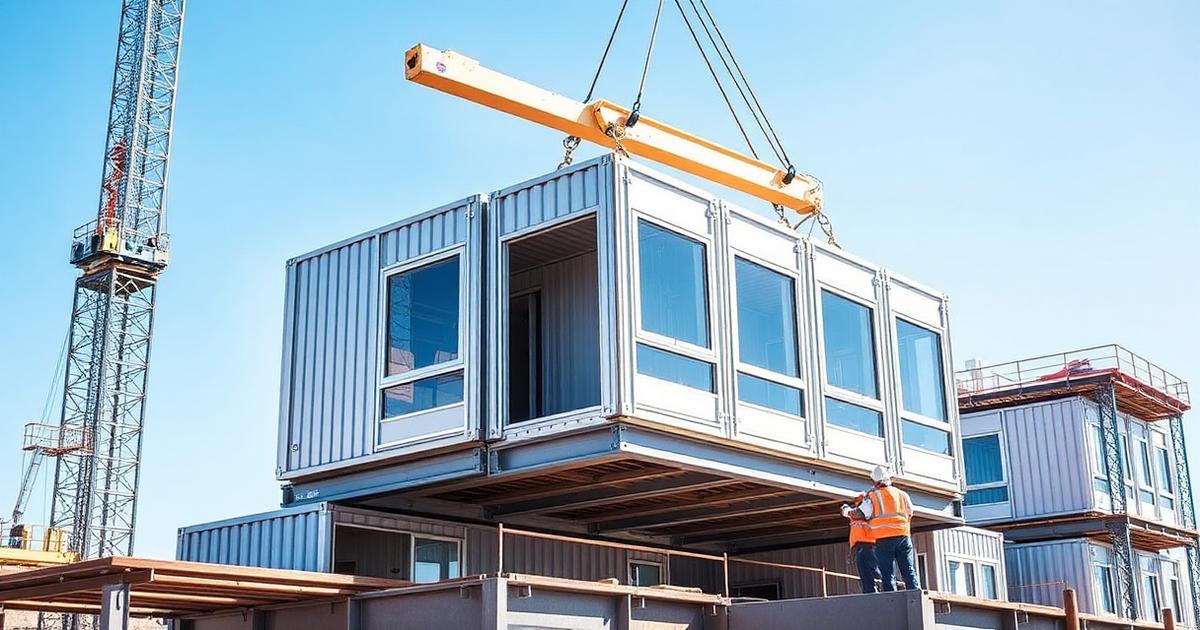
"Prefab saves 20%" is a claim worth interrogating. The savings are real, but they do not come from a cheaper frame. They come from six places at once.
1. Finance cost on a shorter programme
On a project with a two-year build and typical Indian construction finance, removing six months of interest alone can move total cost by several percent. This is usually the single largest line item.
2. Site preliminaries and overheads
Site establishment, supervision, security, plant hire, temporary power and water all run on a monthly meter. Compress the programme and every one of those lines shrinks proportionally.
3. Labour productivity
Factory work is measured, repeatable and weather-independent. A crew fitting panels in a controlled environment produces far more per shift than the same crew working at height in monsoon conditions. Off-site construction typically needs 50-70% less site labour.
4. Material waste
Conventional site construction wastes 5-15% of material through over-ordering, damage and off-cuts. Roll-formed sections are cut to exact length from a digital model, so waste is close to zero and disposal cost drops with it.
5. Foundations
Lighter superstructures need less below ground. On many sites this converts an expensive piled solution into a simple pad or raft foundation.
6. Re-work
Precision manufacture eliminates the most expensive category of construction cost — doing something twice. Clash detection happens in the model, not on site.
Where prefab does not save money
Be realistic:
- Very low-repetition, highly bespoke geometry erodes the factory advantage.
- Remote sites with hard logistics can lose the saving in transport.
- Late design changes cost more, not less, once fabrication has started.
- Small footprints under a few thousand square feet rarely justify mobilisation.
How to capture the saving
- Bring the structural partner in at concept stage, not after tender.
- Freeze the structural grid early.
- Coordinate MEP into the model before fabrication release.
- Plan crane access and delivery sequencing from day one.
Prefabrication rewards planning. Teams that treat it as a late substitution get a fraction of the benefit; teams that design for it from the start hit the 20% figure comfortably.
Planning a project?
Beycon engineers composite steel and LGSF buildings across India. Share your drawings and we'll return a programme and budget view.
Talk to us ↗